Welcome to Astra Starter Templates. This is your first post. Edit or delete it, then start blogging!
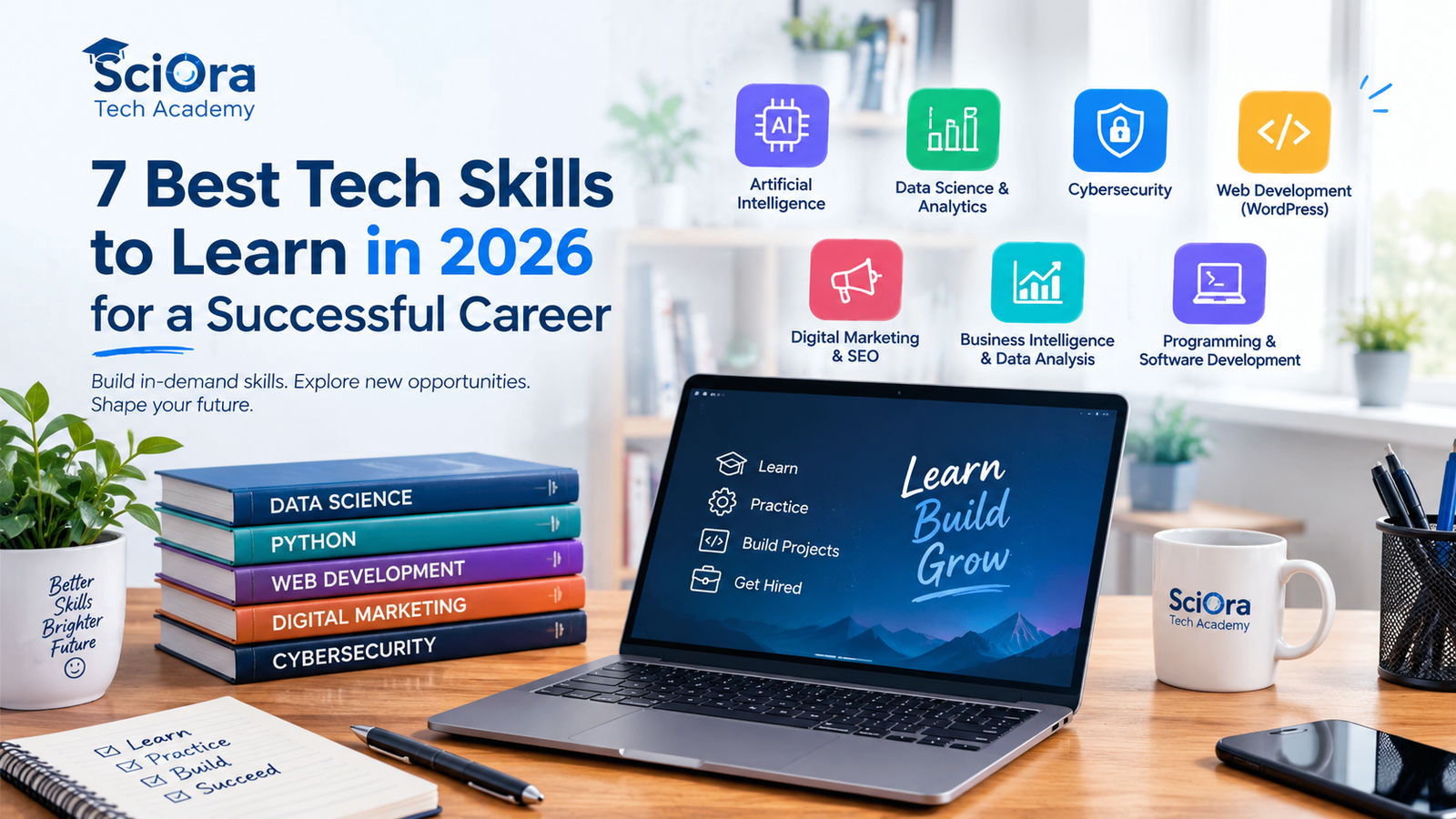
Technology is changing how businesses operate, how people work, and how professionals build their careers. From artificial intelligence and data analytics to cybersecurity and web development, digital skills are becoming valuable across a wide range of industries.
Whether you are a student, a fresh graduate, a working professional, or someone planning to start freelancing, learning the right technology skills can help you explore new career opportunities.
But with so many courses and technologies available, an important question remains: Which tech skills should you learn in 2026?
In this guide, we will explore seven valuable technology and digital skills, what you can learn in each field, and how to choose a learning path that matches your interests and career goals.
1. Data Science and Data Analytics
Businesses collect large amounts of data every day. Data science and data analytics help turn that information into meaningful insights that support better decisions.
Data analytics focuses on examining data, identifying patterns, and presenting findings through reports and dashboards. Data science goes further by using programming, statistics, and machine learning to develop predictive models and solve complex problems.
What should you learn?
- Excel for data organization and analysis
- SQL for working with databases
- Python for data analysis and automation
- Power BI or Tableau for interactive dashboards
- Statistics and data visualization
- Machine learning fundamentals for data science
Career opportunities
You can explore roles such as data analyst, business intelligence analyst, junior data scientist, and reporting analyst, depending on your skills and experience.
Who should learn it? Students and professionals who enjoy problem-solving, working with numbers, identifying patterns, and making decisions based on evidence.
2. Artificial Intelligence and AI Agent Development
Artificial intelligence is helping businesses automate tasks, analyze information, generate content, and improve customer experiences. Beyond using AI tools, learners can develop skills to build practical AI-powered applications and automated workflows.
AI agent development focuses on creating systems that can use tools, process information, and perform defined tasks with appropriate instructions and safeguards.
What should you learn?
- AI fundamentals and prompt design
- Python programming basics
- APIs and integrations
- Workflow automation
- Large language model fundamentals
- AI agents, tools, and practical projects
Career opportunities
Depending on your technical depth, you could work toward AI automation, AI application development, workflow integration, or software development roles involving AI.
Who should learn it? Learners who enjoy experimenting with technology, solving problems, and finding smarter ways to complete repetitive tasks.
3. Cybersecurity
As businesses increasingly rely on websites, cloud services, online accounts, and digital transactions, protecting systems and information is essential.
Cybersecurity involves identifying vulnerabilities, reducing security risks, monitoring suspicious activity, and helping organizations protect their digital assets.
What should you learn?
- Computer networking fundamentals
- Operating systems, especially Linux
- Network security concepts
- Common cyber threats and vulnerabilities
- Security monitoring and incident response
- Ethical hacking fundamentals in authorized environments
Career opportunities
With suitable training and practical experience, you can work toward roles such as junior security analyst, security operations center (SOC) analyst, or penetration tester.
Who should learn it? People who enjoy investigating problems, understanding how systems work, and protecting digital information.
Remember that cybersecurity practice should always take place in authorized labs or on systems you have permission to test.
4. Web Development with WordPress and AI Tools
Every day, businesses use websites to present their services, sell products, publish content, and communicate with customers. Web development gives you the skills to create and maintain these digital platforms.
WordPress is a popular content management system that allows users to build websites without writing every component from scratch. With Elementor, learners can create page layouts visually, while HTML, CSS, and JavaScript provide greater control over customization.
AI tools can also assist with planning, content development, debugging, and repetitive development tasks.
What should you learn?
- WordPress installation and configuration
- Elementor and responsive page design
- HTML and CSS fundamentals
- Basic JavaScript
- Website speed, security, and maintenance
- Search engine optimization (SEO)
- AI-assisted website development
Career opportunities
You can work toward WordPress developer, website designer, Elementor specialist, website maintenance professional, or freelance web developer roles.
Who should learn it? Creative problem-solvers who want to build websites, work with clients, or develop their own online projects.
5. Digital Marketing and Search Engine Optimization
Creating a website is only one part of building an online presence. Businesses also need to reach their target audiences, attract visitors, and turn interest into leads or sales.
Digital marketing combines content, search engines, social media, advertising, and analytics to help businesses connect with potential customers.
SEO, in particular, focuses on improving a website’s visibility in organic search results by making its content useful, accessible, and relevant to users.
What should you learn?
- Keyword research and search intent
- On-page and technical SEO fundamentals
- Content writing and content strategy
- Social media marketing
- Google Ads and Meta Ads fundamentals
- Google Analytics and performance measurement
- Conversion tracking and campaign optimization
Career opportunities
Potential career paths include SEO specialist, digital marketing executive, social media manager, paid advertising specialist, and content strategist.
Who should learn it? People who enjoy communication, creativity, audience research, and using performance data to improve marketing results.
6. Data Analysis with Business Intelligence Tools
Although data analytics and data science overlap, business intelligence focuses strongly on organizing business information and communicating useful findings through reports and dashboards.
For example, a company might use a dashboard to track monthly sales, compare marketing campaigns, monitor expenses, or identify its best-performing products.
What should you learn?
- Advanced Excel and data cleaning
- SQL queries
- Power BI or Tableau
- Data modeling and relationships
- Dashboard design
- Key performance indicators (KPIs)
- Business reporting and data storytelling
Career opportunities
This skill set can help prepare you for business intelligence analyst, reporting analyst, operations analyst, and junior data analyst positions.
Who should learn it? People who enjoy organizing information, working with spreadsheets, and presenting complex information in a clear and visual format.
7. Programming and Software Development
Programming provides the foundation for building websites, applications, automation tools, and many AI-powered systems.
Learning programming helps you understand how software works and gives you the ability to create solutions instead of relying entirely on existing tools.
What should you learn?
- Programming fundamentals
- Python or JavaScript
- Variables, functions, loops, and data structures
- Problem-solving and debugging
- Git and version control
- APIs and basic database concepts
- Practical software projects
Career opportunities
Depending on the language and specialization you choose, you can work toward software developer, junior web developer, Python developer, or automation developer roles.
Who should learn it? Learners who enjoy logical thinking, building things, and solving technical challenges step by step.
How to Choose the Right Tech Skill for Your Career
The best skill for you depends on your interests, existing knowledge, available study time, and long-term goals. You do not need to learn every technology at once.
Use this simple guide to narrow down your options:
| Your interest | Skill to explore |
|---|---|
| Working with numbers and patterns | Data Analytics |
| Building predictive models | Data Science and Machine Learning |
| Automating tasks with AI | AI and AI Agents |
| Protecting systems and information | Cybersecurity |
| Creating websites | WordPress and Web Development |
| Promoting brands and growing traffic | Digital Marketing and SEO |
| Building applications and tools | Programming |
Once you have selected a field, focus on its fundamentals before moving to advanced topics.
A Practical Roadmap to Start Learning Tech Skills
You can make your learning more effective by following a structured approach.
Step 1: Choose one primary skill. Identify a field that matches your interests instead of jumping between unrelated courses.
Step 2: Learn the fundamentals. Understand the core concepts and tools before attempting advanced projects.
Step 3: Practice consistently. Apply what you learn through exercises, assignments, and small projects.
Step 4: Build a portfolio. Create examples of your work, such as a website, data dashboard, automation workflow, or cybersecurity lab project.
Step 5: Develop professional skills. Communication, documentation, teamwork, and problem-solving can help you apply your technical knowledge effectively.
Step 6: Prepare for opportunities. Create a professional CV, improve your LinkedIn profile, and explore internships, entry-level roles, or suitable freelance projects.
Remember that completing a course is a starting point, not a guarantee of employment or income. Practical ability, consistent improvement, and demonstrable projects are important parts of career development.
Learn Technology Skills with SciOra Tech Academy
Choosing a skill is easier when you have a clear learning path. SciOra Tech Academy aims to help learners explore practical digital and technology education across different areas of interest.
Whether you want to build websites, understand business data, explore artificial intelligence, study cybersecurity, or develop digital marketing skills, start by identifying your goal and the knowledge you need to reach it.
Explore the courses available at SciOra Tech Academy and choose a learning path that aligns with your interests.
Your next step does not have to be complicated. Choose one skill, begin with the fundamentals, and keep building your knowledge through practice.
Frequently Asked Questions
1. Which tech skill is best to learn in 2026?
There is no single best skill for everyone. AI, data analytics, cybersecurity, programming, web development, and digital marketing are all worth exploring. Your best choice depends on your interests, existing skills, and career goals.
2. Can beginners learn technology skills without an IT degree?
Yes. Many technology skills can be learned through structured courses, self-study, and practical projects. Some specialized roles may require deeper technical knowledge, recognized certifications, or formal qualifications.
3. How long does it take to learn a tech skill?
It depends on the subject, your starting level, and how consistently you practice. You may learn basic concepts in weeks, while developing job-ready skills can take several months or longer.
4. Which tech skill is suitable for freelancing?
WordPress development, website design, SEO, digital marketing, data analytics, and selected AI automation services can be explored for freelance work. Success depends on your practical skills, portfolio, communication, and ability to meet client needs.
5. Should I learn AI or programming first?
If you want to build AI applications, learning programming fundamentals—often Python—is a useful starting point. If your immediate goal is to use AI tools for productivity or marketing, you can begin with practical AI workflows and gradually develop deeper technical skills.
6. How can I choose the right online course?
Review the course syllabus, learning outcomes, instructor experience, practical assignments, project work, and support available. Choose a course that matches your current level and helps you progress toward a clearly defined goal.
Final Thoughts
Technology offers many paths for people who want to develop practical skills and explore new professional opportunities. The key is to avoid trying to master everything at once.
Choose one field, learn its fundamentals, practice with real projects, and gradually develop a portfolio that demonstrates what you can do.
Explore your options with SciOra Tech Academy and take the first step toward building your technology skills.